Framing and Trim Require Steady Hands
Carpentry in Conway for structural improvements and detailed interior enhancements in residential properties
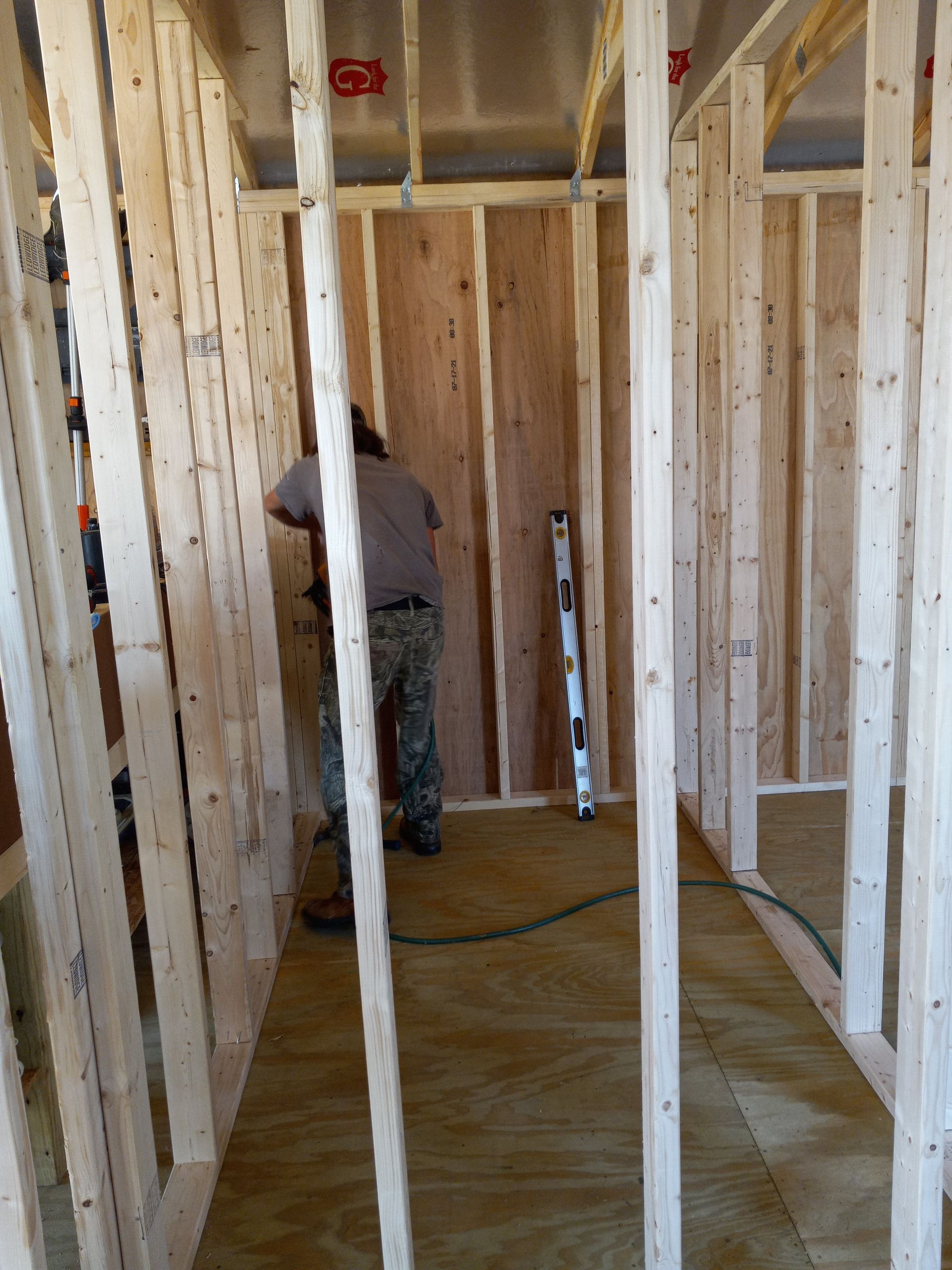
A.L.B. Home Improvements offers professional carpentry in Conway for homeowners who need structural framing corrected, custom trim installed, or interior woodwork that fits precisely without gaps or misalignment. You see door frames that are out of square, baseboards that pull away from walls, or ceiling joints where crown molding refuses to sit flush. Carpentry work addresses both the rough framing that holds the house together and the finish details that define how rooms look and feel once the walls are closed and painted.
Rough carpentry includes framing repairs for load-bearing walls, installing headers over new openings, sistering joists that have weakened over time, and building structural supports for additions or reconfigurations. Finish carpentry involves installing door and window casings, chair rails, wainscoting, built-in shelving, and custom trim profiles cut to match existing architectural details. Coastal homes often require fastener selection and wood species that resist moisture movement and corrosion from salt air, which affects how joints hold over time and how finishes adhere.
If your home has framing issues, outdated trim, or custom woodwork needs that require precision and experience, contact A.L.B. Home Improvements to schedule an assessment and receive a clear explanation of what the work involves.
How Carpentry Changes What You See and Touch
You start with walls that feel unstable when you press on them, door frames that twist enough to prevent doors from latching, or trim joints that open wider each season as wood expands and contracts. The process involves measuring existing conditions, cutting framing members to correct dimensions, fastening them with screws or structural nails rated for the load, and verifying that corners are square and surfaces are plumb before drywall or trim is applied. Finish work requires coping joints for inside corners, scribing pieces to fit irregular walls, and sanding edges smooth before stain or paint is applied.
Once the carpentry is finished, door frames hold square, trim sits tight against walls without gaps, and shelving supports the weight it was designed to carry without sagging. You run your hand along a baseboard joint and feel no ridge or separation. A.L.B. Home Improvements uses hand tools and power equipment calibrated for accuracy, and each piece is test-fit before final fastening to avoid forced joints that split or pull loose within the first year.
Material selection depends on the location within the home, exposure to moisture, and whether the wood will be painted or left natural. Pressure-treated lumber is used where code requires or where contact with concrete or exterior conditions is unavoidable. Interior trim is often primed pine or hardwood selected for grain consistency and workability. What is not included are drywall repairs unrelated to the carpentry scope, painting, or hardware installation unless specified during the estimate.
Common Questions About Residential Carpentry Work
Carpentry involves both structural decisions and finish details, so understanding what drives material choice, sequencing, and long-term performance helps you make informed decisions about your project.
What is the difference between rough and finish carpentry?
Rough carpentry builds the frame, installs structural supports, and establishes square corners and level surfaces, while finish carpentry applies trim, casings, and decorative elements that are visible after walls are closed.
How do you match existing trim profiles in older homes?
Profiles are measured, photographed, and either replicated using a router and custom bits or sourced from millwork suppliers who stock historical patterns common in Conway-area construction.
When should framing be repaired instead of replaced?
If the wood is still solid, not rotted, and can be reinforced with additional fasteners or sister boards, repair is often faster and less disruptive than full replacement, though any structural compromise is addressed completely.
What fasteners hold best in coastal environments?
Stainless steel screws and hot-dipped galvanized nails resist corrosion better than standard fasteners, especially in areas with high humidity or where wood contacts treated lumber or metal flashing.
Why does wood move after installation?
Seasonal changes in humidity cause wood to expand and contract across the grain, so joints are planned with slight clearance and fasteners are placed to allow movement without splitting or buckling the material.
A.L.B. Home Improvements has provided carpentry services in Conway for decades, handling both structural repairs and finish work that requires precision and attention to detail. Call to discuss your project and schedule a consultation.