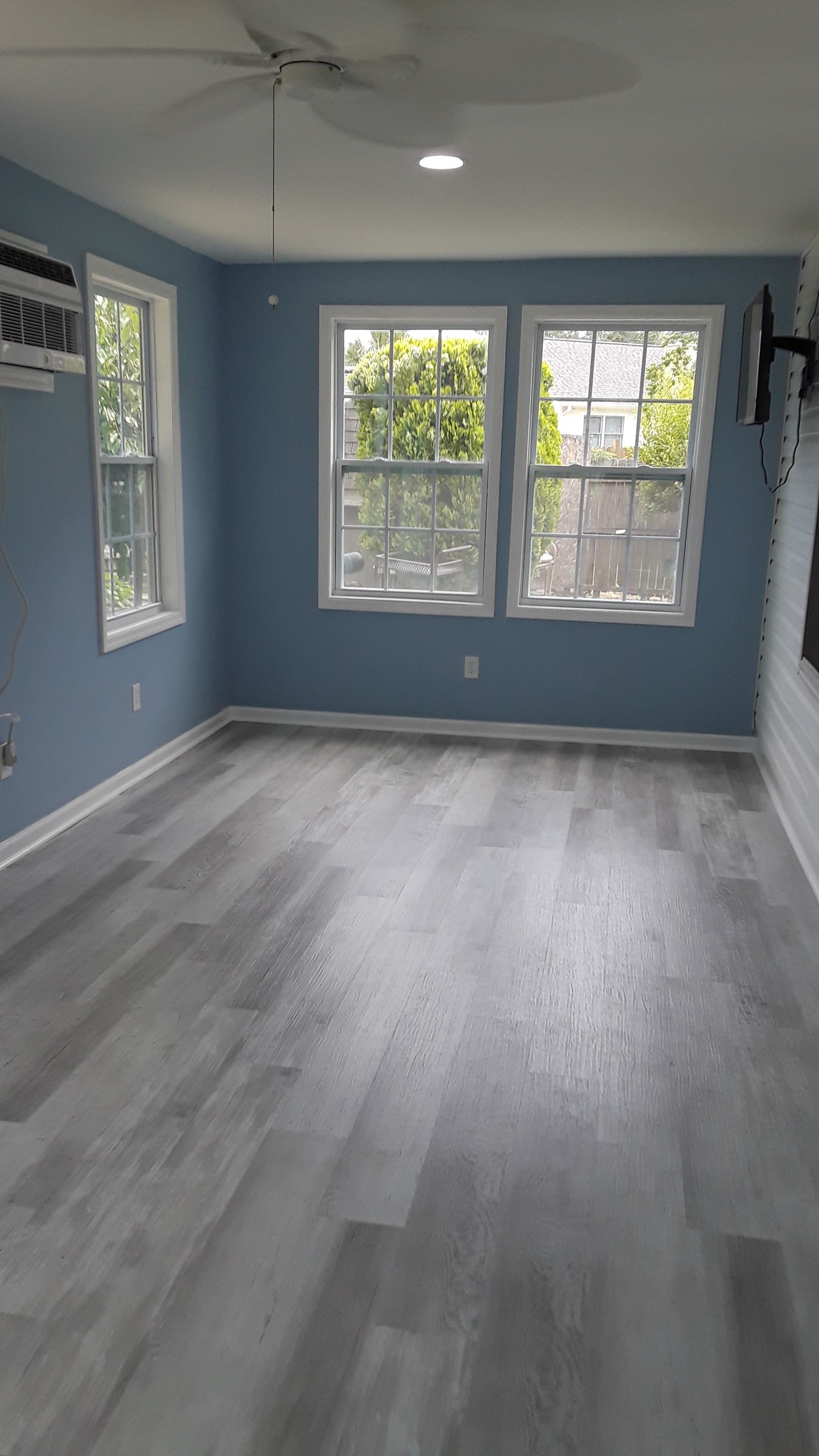

Old Floors Show Wear You Cannot Hide
Flooring in Conway for high-traffic areas in full-time residences and coastal properties needing updated, durable interiors
A.L.B. Home Improvements installs and replaces residential flooring in Conway for homeowners whose floors have worn through the finish, show water stains from past leaks, or feel soft and uneven underfoot. You walk across rooms where the surface is scuffed beyond repair, where boards creak and flex with each step, or where outdated materials no longer match how you use the space. Flooring work begins with removing old material, inspecting and repairing the subfloor, and installing new surfaces chosen for durability, moisture resistance, and compatibility with the home's foundation type and traffic patterns.
Subfloor preparation is critical for long-term performance. Plywood or OSB panels are checked for flatness, and any areas with rot, delamination, or movement are replaced or reinforced. Underlayment is added where required for sound dampening or moisture control. Installation methods vary by material: hardwood is nailed or stapled over wood subfloors, luxury vinyl plank floats or glues down depending on manufacturer specifications, and tile requires a mortar bed or backer board for stable adhesion. Coastal properties require attention to vapor barriers and moisture levels in slabs, as humidity affects adhesive cure times and dimensional stability.
If your floors are worn, damaged, or no longer suited to how you live, contact A.L.B. Home Improvements for a free estimate to review your options and determine the best flooring solution for your home in Conway.
What You Notice After New Flooring Goes In
You begin with floors that feel uneven, show visible damage, or require rugs and furniture placement to hide problem areas. The process involves pulling up old flooring, removing baseboards carefully to avoid damage, inspecting the subfloor for soft spots or squeaks, and making repairs before new material is laid. Transitions between rooms are planned so that height differences are minimal and thresholds sit flush. Cuts around door casings, heat registers, and irregular walls are measured and test-fit before final installation to avoid gaps or forced fits that buckle over time.
Once the flooring is installed, you walk across rooms that feel solid and level underfoot. Seams align tightly without lippage. Baseboards are reinstalled and caulked where needed to cover expansion gaps without restricting movement. A.L.B. Home Improvements selects fasteners, adhesives, and underlayments based on the specific material and subfloor type, following manufacturer guidelines to preserve warranties and ensure the floor performs as expected over years of daily use.
Material options are discussed during the estimate phase, with attention to scratch resistance, water tolerance, maintenance requirements, and how the flooring will look as natural light shifts throughout the day. What is not included are furniture moving, disposal of old flooring unless arranged in advance, or repairs to walls or ceilings unrelated to the flooring scope, though coordination with other trades can be planned if the project involves multiple upgrades.
Questions Homeowners Ask About Flooring Projects
Flooring choices affect both appearance and function, so understanding what influences material performance, installation requirements, and long-term durability helps you make decisions that fit your household and your home.
What flooring materials work best in coastal homes?
Materials with low moisture absorption and dimensional stability, such as luxury vinyl plank, porcelain tile, or engineered hardwood, perform better in humid environments than solid hardwood or laminate that swells with moisture changes.
How do you prepare subfloors for new flooring?
Subfloors are checked for level, loose panels are refastened, damaged sections are replaced, and underlayment is installed where sound dampening, moisture control, or cushioning is required by the flooring manufacturer.
When should you replace flooring instead of refinishing it?
If the surface is worn through to bare wood, if boards are cupped or warped, or if water damage has penetrated the subfloor, replacement is often more cost-effective and longer-lasting than sanding and refinishing.
What causes flooring to buckle or separate after installation?
Insufficient expansion gaps, high subfloor moisture, adhesive applied in extreme temperatures, or improper acclimation of materials before installation can all lead to movement and failure within months of completion.
Why is flooring installed in Conway different from inland areas?
Higher humidity, salt air, and moisture movement through slab foundations require careful selection of adhesives, vapor barriers, and fasteners to prevent delamination, corrosion, and dimensional changes over time.
A.L.B. Home Improvements has installed residential flooring throughout Conway, working with homeowners who need durable, well-prepared surfaces that hold up to daily use and coastal conditions. Reach out for a free estimate and material consultation.