Outdoor Space Needs Stable Ground Underneath
Deck Construction in Conway for backyard upgrades in established residential communities needing expanded outdoor living areas
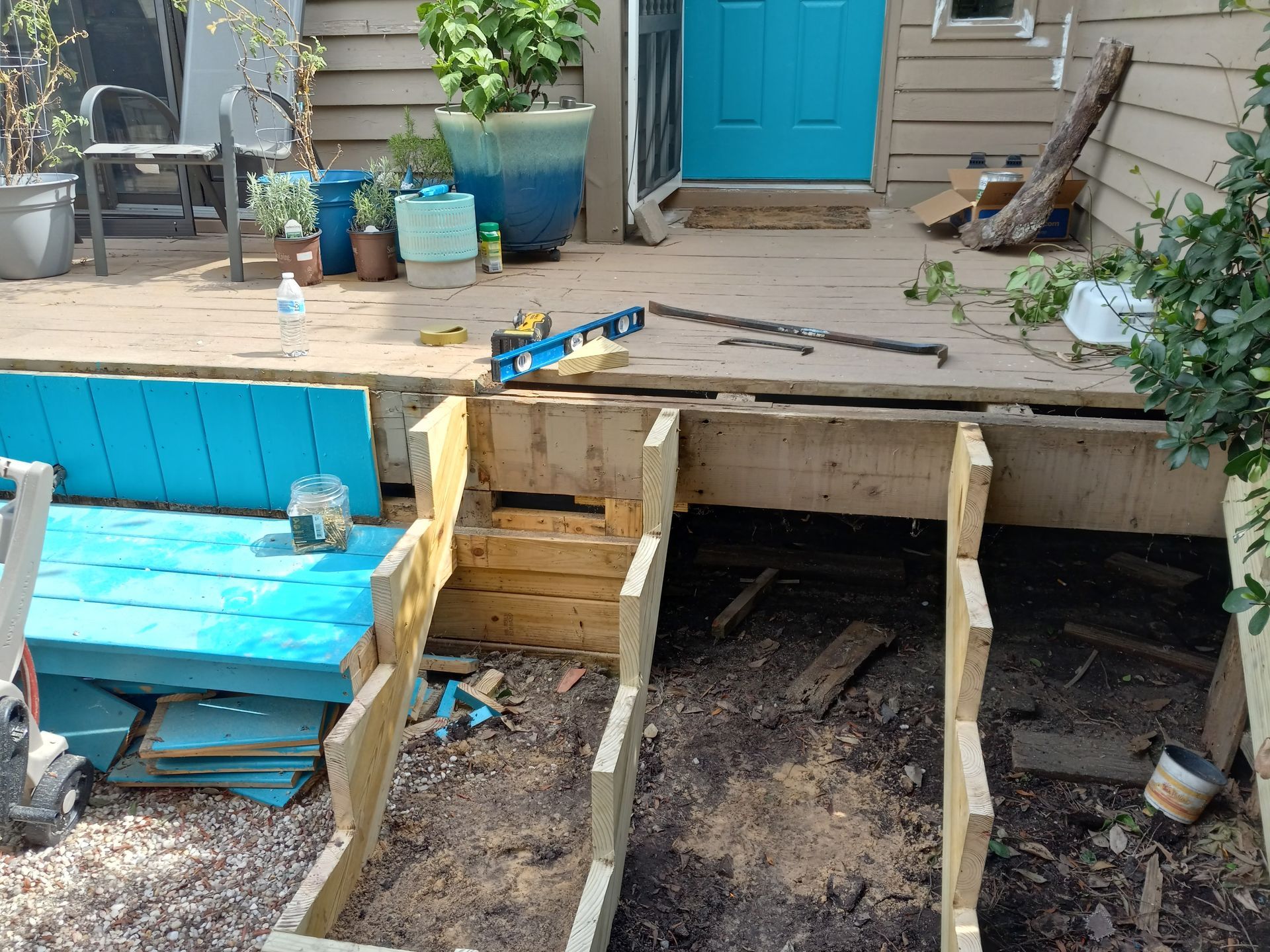
A.L.B. Home Improvements builds custom decks in Conway for homeowners who want usable outdoor space for gatherings, grilling, or simply sitting outside without standing in the grass. You have a backyard that slopes, drains poorly, or lacks a level surface large enough to set up furniture and move around comfortably. Deck construction begins with laying out the footprint, setting posts on stable footings below the frost line or in accordance with local soil conditions, and building a structural frame strong enough to support people, furniture, and weather loads without sagging or shifting over time.
Framing uses pressure-treated lumber sized to span the distance between supports without bounce. Joist spacing follows code requirements based on decking material and expected load. Ledger boards are flashed and fastened to the house with lag screws or through-bolts, never nails alone. Decking is installed with consistent gaps for drainage and wood movement, and fasteners are chosen to resist corrosion in coastal humidity and salt exposure. Railings are built to code height and baluster spacing, with posts anchored securely to the frame. Stairs are framed with stringers cut to match rise and run requirements, and treads are fastened to prevent movement or splitting.
If your property needs a deck that extends your living space and holds up to South Carolina weather, contact A.L.B. Home Improvements for a consultation and timeline estimate for your project in Conway.
What a Finished Deck Adds to Your Property
You start with a backyard that is difficult to use for anything beyond mowing. The process involves staking out corners, digging footing holes to depth, pouring concrete or setting precast piers, and bolting posts into place. Beams are set level across the tops of posts and secured with carriage bolts or structural screws. Joists are hung from the ledger and beam using galvanized hangers, and blocking is added where needed for lateral stiffness. Decking boards are laid perpendicular to joists, fastened at each crossing, and trimmed flush at the edges.
Once the deck is complete, you step out onto a surface that feels solid, drains water between boards, and provides enough room to arrange seating, a grill, and space to move without crowding. Railings are sturdy enough to lean against. Stairs descend evenly without wobbling. A.L.B. Home Improvements builds decks with attention to fastener placement, wood grain orientation, and joist alignment so that the structure remains level and secure through years of use and exposure to rain, sun, and humidity.
Material choices depend on budget, maintenance preferences, and appearance. Pressure-treated lumber is economical and durable when properly fastened and finished. Composite decking resists rot and insects but requires specific fastening methods and ventilation underneath. What is not included are landscaping, irrigation relocation, or exterior lighting unless discussed during planning, though rough-ins for electrical or plumbing can be coordinated if the deck design includes those features.
Common Questions About Deck Building Projects
Deck construction involves structural decisions, material selection, and site-specific challenges, so understanding what affects stability, durability, and code compliance helps you plan a project that meets your needs and lasts.
What size footings are required for deck posts?
Footing size and depth depend on soil type, frost line, and the load the deck will carry, with local building codes in Conway typically requiring concrete footings poured below the frost line or set on undisturbed soil.
How do you attach a deck ledger to the house safely?
The ledger is bolted through the rim joist into solid framing, with flashing installed behind and over the ledger to direct water away and prevent rot where the deck meets the house.
When is a permit required for deck construction?
Permits are typically required for decks above a certain height, attached to the home, or exceeding a specified square footage, and inspections verify footing depth, ledger attachment, and railing height before final approval.
What fasteners resist corrosion in coastal areas?
Stainless steel or hot-dipped galvanized screws and bolts hold up better than standard fasteners in humid, salt-laden air, preventing rust stains and structural weakening over time.
Why does wood decking need regular maintenance?
Pressure-treated wood benefits from periodic cleaning and sealing to slow moisture absorption, reduce cracking, and maintain color, while composite materials require cleaning but not refinishing.
A.L.B. Home Improvements has built decks throughout Conway, working with homeowners who need reliable framing, quality materials, and clear project management from layout through final inspection. Call to discuss your backyard project and receive a detailed estimate.