Bugs and Debris End Outdoor Enjoyment Fast
Screened-In Porches in Conway for homeowners needing protection from coastal insects and debris during outdoor living
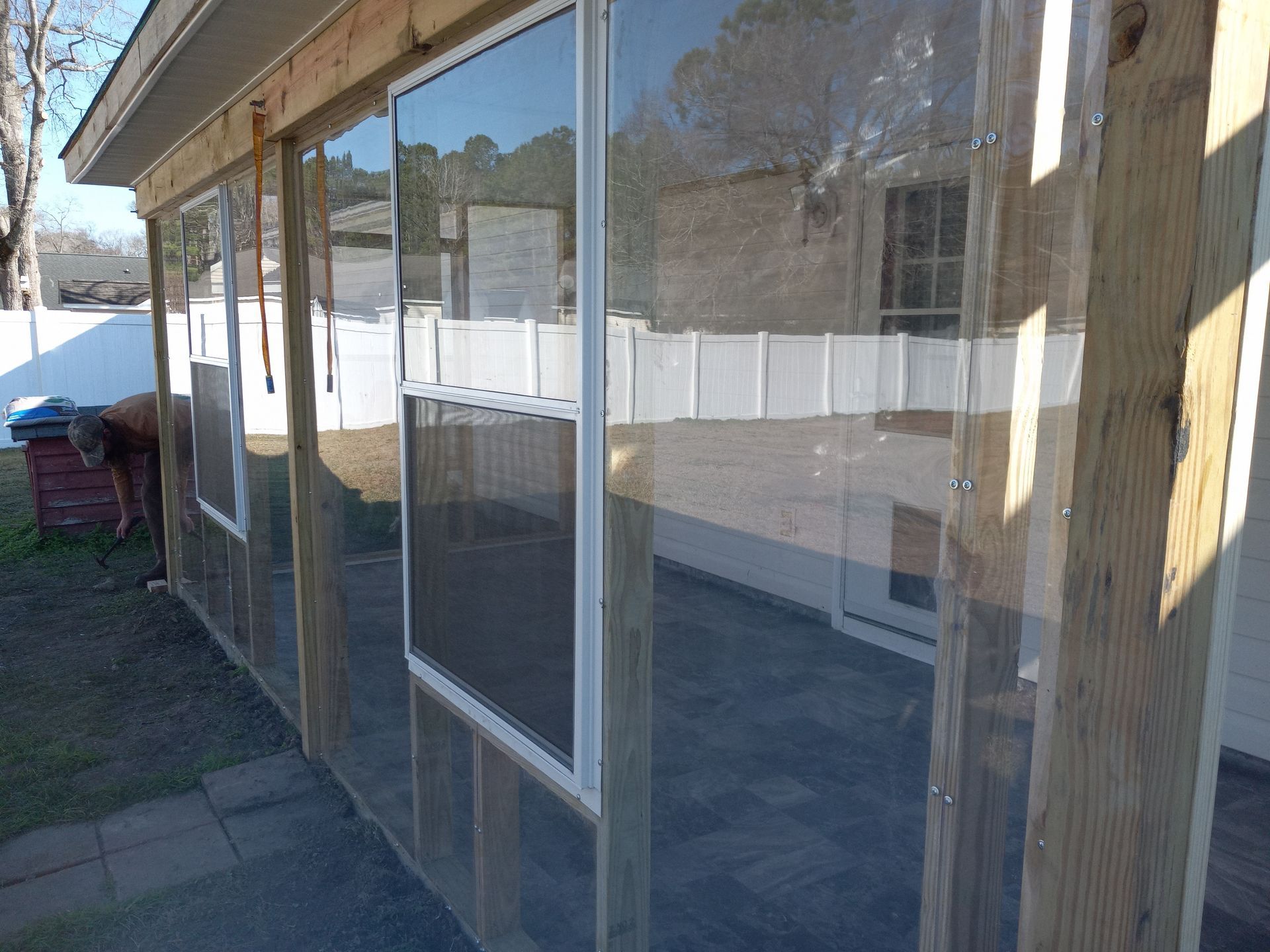
A.L.B. Home Improvements builds custom screened-in porches in Conway for homeowners who want to sit outside without swatting mosquitoes, cleaning pollen off furniture, or watching debris blow across the porch during windy afternoons. You have an open deck or patio that becomes unusable once the sun sets and insects arrive, or a covered area where leaves, sand, and twigs pile up faster than you can sweep. A screened-in porch extends the time you can spend outdoors by enclosing the space with durable framing and screen panels that keep pests and debris out while allowing air to move freely.
Construction begins with evaluating the existing structure to determine if it can support a roof and screen walls, or if additional footings and framing are required. Posts are set and braced, beams are installed to carry roof loads, and rafters or trusses are framed to match the roofline of the house. Screen panels are built using wood or aluminum frames, with screen material stretched tight and fastened to resist tearing and sagging. Doors are installed with closers to prevent accidental openings, and thresholds are sealed to keep insects from entering underneath. Materials are chosen for resistance to humidity, salt air, and UV exposure, as coastal conditions degrade untreated wood and low-grade screen mesh within a few seasons.
If you want a porch that lets you enjoy the outdoors without insects or blowing debris, contact A.L.B. Home Improvements to discuss design options, material choices, and scheduling for your screened-in porch project in Conway.
What Changes After the Screens Go Up
You start with a space where sitting outside requires bug spray, citronella candles, or retreating indoors once the light fades. The process involves framing walls with properly spaced studs to support screen panels, installing a roof structure that sheds water and provides shade, and fastening screen material in frames that can be removed for cleaning or replacement. Corners are squared and braced, roof edges are trimmed and flashed, and fasteners are selected to resist corrosion where metal meets treated lumber or where moisture collects along joints.
Once the screened-in porch is finished, you sit outside in the evening without insects landing on you or your food. Leaves and sand stay outside the screen walls. Furniture remains cleaner between uses. A.L.B. Home Improvements builds screen panels with tight corners and secure fastening so that mesh does not pull loose or sag under wind pressure, and doors close firmly enough to keep pests out but smoothly enough for daily use without frustration.
Design considerations include roof pitch to match the home, ceiling height for comfort and airflow, and door placement for convenient access. Electrical rough-ins for ceiling fans or lighting can be coordinated during framing if planned in advance. What is not included are interior finishes like beadboard ceilings, flooring upgrades, or built-in furniture unless specified during the estimate phase, though these elements can be added to the scope if desired.
Questions About Screened-In Porch Construction
Screened-in porches involve structural framing, material selection, and design choices that affect long-term durability and usability, so understanding what makes a porch hold up in coastal conditions helps you plan a space that works for your household.
What type of screen material lasts longest in coastal areas?
Fiberglass mesh resists corrosion and UV breakdown better than standard aluminum screen, and heavier gauges withstand impact from blown debris and accidental contact without tearing easily.
How do you prevent screen panels from sagging over time?
Screen material is stretched tightly during installation and fastened with spline in grooved frames or stapled and trimmed in wood frames, with intermediate supports added for large panels to prevent drooping.
When is a roof required for a screened-in porch?
Roofs provide shade, keep rain off the porch floor, and reduce heat buildup, making the space more comfortable during peak sun hours and extending the usability of the porch throughout the day.
What makes a screened porch frame stable in high winds?
Proper post anchoring, diagonal bracing at corners, and secure attachment to the house structure keep the frame from racking or shifting when wind loads hit the large surface area of the screen walls.
Why do doors need closers on screened porches?
Closers ensure doors latch fully after each use, preventing insects from entering when the door is left ajar, and they reduce wear on hinges and latches from repeated slamming or drifting open.
A.L.B. Home Improvements has built screened-in porches throughout Conway, working with homeowners who want comfortable outdoor spaces that blend with their home's architecture and stand up to coastal weather. Reach out to schedule a consultation and receive a project estimate tailored to your property.